
Squarehead: 'It was hard, at the time, but you don’t realise, because it’s so much fun at the time as well'
Roy Duffy on 15 years of Squaread and making their fourth album Ossory Road

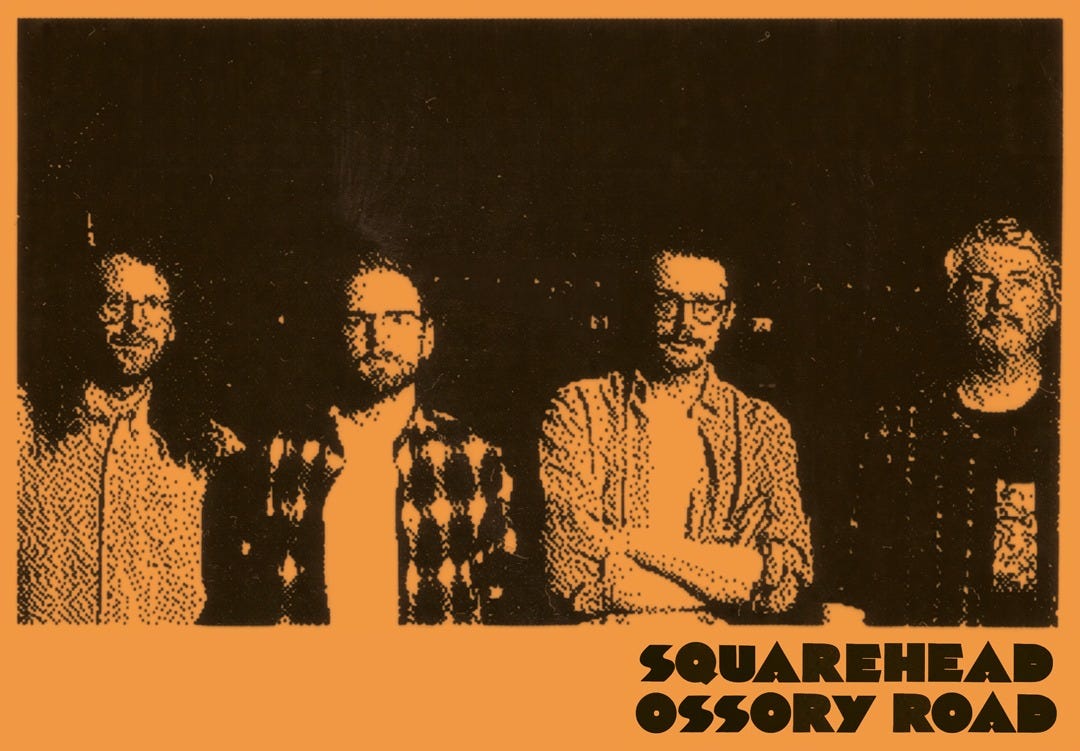
Dublin four-piece Squarehead (Roy Duffy, Ian MacFarlane, Ruan van Vliet and Rudhán O’Mara) have been making and releasing music together since 2011’s Yeah Nothing. Riding the wave of recession-era creativity that defined Dublin’s independent music scene in the early 2010s, they rarely seemed to slow down, touring relentlessly around Ireland and the US in the years that followed. A split release with So Cow arrived shortly after Yeah Nothing, followed by second album Respect in 2013. Then came a six-year hiatus before 2019’s High Tide, and another before fourth album Ossory Road, surprise-released in December 2025. This week, I spoke to Roy Duffy on the TPOE podcast about Squarehead’s 15-year journey - the highs, the lows and the what-ifs. You can listen in full via the player below, or read an edited version of the conversation underneath.
Squarehead play Bello Bar in Dublin on May 30 with support from Anamoe Drive. Tickets.
Subscribe to The Point of Everything podcast on Spotify | Apple Podcasts
TPOE 395: Squarehead
Because I haven’t chatted to you about Squarehead or anything before, maybe we’ll just start at the beginning. What was the scene in Dublin like that Squarehead were born out of?
We started strangely enough because me and Ian our bass player were in a band with our good friend from school called Lar Kay and he went on to be the guitar player of Adebisi Shank and All Tvvins and now he plays with the Coronas. So the three of us were in school together - we started a band called The Manas that was like a math-rock band. This is in the early aughts when the Mars Volta or At the Drive-In and Battles and all these bands were just huge and we were going to see them all the time. So we were big fans of that kind of stuff, started playing that math-rocky thing. Our friend Barry Lennon, who ended up being the vocalist in Hands Up Who Wants to Die that I played bass in, he put out our first 7” on his label that was called Armed Ambitions.
And through that scene that was a lot of punk bands and post-rock bands and math rock bands, if you want to call it that, around the Lower Deck, especially, in Dublin, there were gigs every week or every night of the week sometimes. Got to know loads of different people. And I was always still doing acoustic stuff at home on my own that was definitely not in the math rock, punk rock, heavy side of things.
So I think it was only myself and Barry; after that band with Ian and Lara fizzled out, we did Hands Up Who Wants to Die, and we did a bunch of tours around that first album that I was on with them. We did an Eastern European tour. It was us and another band called Gestamo Orchestra. We went all around Eastern Europe, and went to Ukraine and all these different places like Beirut. And they said, Why don’t you open up and do your acoustic stuff? And I was like, Oh, I don’t know about that, playing to a squat in Berlin to a bunch of crusties. But it turns out they loved it. They were all drunk and just singing along to ‘Fake Blood’ and all these songs that I just had done on my own.
So I gave it the name Squarehead and when I got back from that tour, I started recording demos with our friend Andy Walsh - I Heart the Monster Hero was his moniker at the time. So through that, Squarehead was born, and a few gigs happened, and Ian decided to play bass with me. And once we had a bass player, we needed a drummer. So it became less acoustic and more of a full-band thing. And then Barry Lennon comes back into the scene through Richter Collective, who he’s now running with our friend Mick Roe, who played in Lar’s band, Adebisi Shank. So it’s just like a whole bunch of mates all from different bands chopping and changing roles and eventually fell into the version that Squarehead was.
I didn’t realise that Squarehead started as an acoustic project. It’s hard for me to hear that now - has there been an acoustic Squarehead release?
No, because the first one was supposed to be that was on Any Other City, James Byrne’s label, who played with Villagers and released early Villagers stuff. He had seen us play - just me on acoustic guitar, and Ian maybe playing an acoustic bass; kind of like Violent Femmes-y. Then once we decided we were going to do that release with him, we said, ‘Oh, let’s put some drums on it.’ And then we used electrics. It always happens with Squarehead - you just start adding stuff and getting a bit too carried away. You want that wall of sound thing.
So tell me about figuring out that Squarehead sound. It’s been a fairly consistent sound over the years - rock, surf rock. Was that what you were going for after maybe you put the acoustic guitar down?
Totally. Around the time I was doing the demos of the acoustic stuff, everyone was like, ‘Oh, it sounds like Weezer.’ So, I was like, ‘OK, if we’re sounding like Weezer, we should get some heavy guitars in here and see what that sounds like.’ And rocking up the stuff did sound good on most of it. So just went in that direction, although the first one’s a lot less rocky. It’s more Beach Boys sounding and a bit cleaner. Definitely, for the second album, we decided to push it a bit heavier, and that was like a conscious decision. And then through it, like different elements, like adding Ruadhán on the synths became an element that we liked to play with. It gets more spacey or ethereal. But as far as planning what the project or anything like that was going to sound like, that didn’t come into it. It was just, this is what I sound like when I’m playing music by myself at home. And these are the weird little songs I come up with. And this is what me and my friend Ian, and then our friend Ruan do with them.
Do you just focus on Squarehead then? Does that become your only band? Or are you still diving into other people’s music?
There was a period where I was still playing with Hands Up, but it was hard to juggle the really heavy touring schedules that they wanted to do and release schedules with also writing and recording and playing gigs. Because Squarehead just immediately started doing a lot, once we released our first single, ‘Fake Blood’. I think it was the Nialler9 thing, got a lot of traction. It was getting a lot of radio play at the time as well. It was a different era. There was no streaming or anything like that. There was blogs and stuff, and if you got a write up and this or that, that would get you a bit more of a fan base or whatever. So we just played and played and played relentlessly for the first three years. I’d say.
I have in my head that you were touring or playing, doing radio as well, outside of Ireland too. Were you in the UK a lot?
The UK a lot at the start. I think Holland was the only country we ever played outside of Ireland in Europe. But then we straight away went to the States and played there. We did about three tours, I think, of the States, and they were a lot of fun. Lose a lot of money. Some of them were slightly dangerous. We got deported from Canada because of a visa issue. But they were fun, and we just kept plugging it because we did well over there. I think that Weezer-y US rock sound, as you were saying, has a bigger audience there than maybe it does here, or other places,. Like whenever we played places like England, we were definitely not cool or hip enough. We were just these dorky Irish lads that played US rock music like you’d find teenagers doing in a garage or something.
When did you play the States first? When did you first head over there?
2012. Those first three years were just full on, we just toured non-stop. We got involved in the Richter Collective very early on. They were great at the media at the time - PR stuff and just getting us out there and over to England and playing shows with bigger bands in London, and doing radio. And then the US thing happened through the FMC crowd - they do SXSW. We had some friends in New York, the writer Liz Pelly and her sister Jenn Pelly. They were in Dublin for a summer, and they stayed with a couple of friends of ours. So we just met them through the music scene, and they were big fans of some of the Popical Island bands. So when we went over to do SXSW, we contacted them, and they said, ‘Yeah, come up to New York. We’ll book you a show. We have friends in Boston. We’ll book you a show.’ Real old school - just like, email this person, ask for a show; email this person. And so we ended up, on a shoestring budget, flying over. We were borrowing amps at every venue, but it’s a good way to meet people. You show up and you’re like, ‘Hey, can we use all of your gear. We’re from Ireland. We couldn’t get ours over here.’ So we went from Vermont, Boston, New York, then down to SXSW. Then we went up to Toronto for the CMW Festival, and back to New York, I think. And so we do these loops and just dot around.
And so back then, it felt like SXSW was such a big thing. It doesn’t seem like it’s that way for a couple of reasons now. What was it like playing that then, did it feel like it was a real showcase, that you have to really impress people? Did you enjoy the experience of playing SXSW.
Yeah, we’re the least business-minded band in the world. Like I know young bands now have obviously all the wealth of information online; there’s courses you can do and all these things that educate you how to market yourself, how to do PR, these kind of things. We had zero. So we just showed up. Our manager at the time wasn’t even there. I remember we did one of the main showcases, and someone was like, ‘This person wants to talk to your manager.’ We were like, ‘He’s not here. He’s on holidays.’ You could say we messed up those opportunities, but we had a lot of fun. And those places, and experiences were just amazing.
When you say that, are you like, ‘Ah, why do we do that? What if we had done it the ‘right way’’?
There might have been at the time. But knowing us as people and knowing us as a band now, after this long, no, we’re just not that way inclined at all. We’re just not great at schmoozing or networking. In an environment like that. I think it was a 9am gig, people are all hungover, and it’s just like, ‘OK, this booking agent wants to speak to you’. We were like (shudders), only like, 21 or 22 so babies.
We’ll continue our chronological journey down the years. Respect followed in 2013, so just two years on from the first album. Was it just that you were riding this wave of creativity, both around you - with Popical Island, Richter Collective, the Dublin music scene - and also just this trajectory that Squarehead seemed to be on as well. It was easy to make a second album?
Yeah, exactly as you said, but we did do an album in between those two that was going to be the second album, but it got picked up by a label in the States called Inflated Records, and they were interested in putting out a record by a band called So Cow as well, from Tuam. We were really good friends with So Cow and we actually played a bunch of dates together on one of those US tours. So the idea became, why don’t we do a split album? So we took all the songs that were going to be our second album and put them on the split album with So Cow called Out of Season. And I think that came out in 2011 as well.
That could have been early 2012 but it just meant that we took a chunk of what we were working on for the second album and put it on this. I think it’s about seven or eight songs, I can’t remember, and that is still available online somewhere. It got us back to the States, and we did a lot of gigs around it, but it didn’t register much with the circles we were in over here. So then Richter Collective approached us about the second album, so that’s when we started the Respect stuff. But unfortunately, before that came out, the Richter Collective folded. So that was bittersweet. It definitely filtered into some of the vibe of that record - sadness, frustration and just things have their their time or whatever.
How do you look back on it now? What were you thinking with that? I mean, can you go back to 2013 and think what were we hoping for with this album?
It was definitely a progression, as you said, just going with the momentum that we had, and not wanting to stop, take a breath, even when we should have, I’d say, because that had been at that point, three or four years of just relentless gigs and releases and writing and recording and having no money to show for any of it, and trying to do little jobs here and there. It was hard, at the time, but you don’t realise, because it’s so much fun at the time as well.
When is the next Squarehead release? I have it that High Tide (2019) is next. Am I missing something in between?
We did take a break around then, after (Respect). We still played together every week. But just mentally, some of us were just absolutely zonked from at that point, four years of constant Squarehead would take its toll on anybody. But it took a while to get the juices flowing again and get songs going. So then you’re into 2015. I think High Time came out in 2019. Somebody highlighted, it’s been six years since that one, and it was six years in between. Six years does seem like a lot when you consider the three, four years that we were really firing on all cylinders and putting out stuff and touring and stuff. But life stuff gets in the way: People get married, move away jobs change. So it took a while to get that next one going, but it was our friend Gugai McNamara from the Roisin Dubh and Strange Brew records, who approached us. He’d always been really kind to us whenever we played in Galway, and always a big fan, so he approached us about doing an album, and that was when we were like, ‘OK, let’s get the band back together,’ or not back together, since we never stopped playing, but let’s do something again.
We released High Time at the end of 2019 with big plans to go touring and stuff in 2020 which was like, ‘ahhhhh’, and I’m sure to anyone involved in releasing the album, was a bit of a pain, because the thing just sits there for a couple of years not getting pushed. But we did what we could. We stayed in touch on Skype, and I kept writing and writing. Would send stuff to the guys, and myself and Ian did a side project called Shark Palace with our friend Mark Chester from Ginnels and our other good friend, Sherry, who recorded the songs. We put that up Bandcamp recently. It was just a fun pop punk thing that we bashed out for the hell of it in between some lockdown or whatever.
But once we got back together and things were getting back to normal, we were like, OK, gotta do another album. And didn’t intend for that to be another six-year gap. But I guess those three years, covid era, lead into two years of just working hard to write, record and build on the release.
Squarehead’s fourth album Ossory Road (released in December 2025) was written around 2023 as Roy and drummer Ruan were, respectively, expecting babies around the same time
So that year was spent really knuckling down whenever we could, because you want to be home as much as possible and take care of everything. So you’re like, let’s just go in, two, three hours, bash out these songs. And we thought we were doing demos that we’d work on an album later, just so we had them documented. Ian, our bass player, had gotten really good at recording and software and stuff during covid, so he was documenting all these demos. And sometimes I’d just show up and say, ‘Ian put this beat in here, this click track, and I’ll just record these guitars. And Ruan, you just play these drums straight beat. And he’s like, No, I need more time to learn this. And I’m like, Just go, the chorus is in two.’ And we’d just record demos like this, and I’d go in the next day and just do some vocals over it, just to get these ideas down on paper or whatever. And our producer, Les, who’d done the last two albums, heard us doing all this, and he was like, ‘No, fuck that. This is the album. You guys just work on this. It sounds great.’ So we just built on those demos and worked really hard over the next six months before both babies came a week apart. So we finished everything then and then it was just like both of us, me and Ruan, were at home with our new babies, and just sending notes to Ian about mixing and stuff like that for a good six months or so.